Facebook
 Twitter
 Pinterest
 YouTube

 EASY SHOP
3 Ring Binders: History, Sizes, Types, Materials, and Uses
3 ring binders come in dozens of sizes, ring styles, and materials, and this guide gives you everything you need to pick the right one. Below we cover the history of the ring binder, standard binder sizes, O-ring vs. D-ring capacity, common materials, and the best uses for 3-ring binders at the office, at school, and at home.
The History of the 3-Ring Binder
There is some debate over who invented the first binder. In 1854, the first patent for loose-leaf paper was filed, and that same year Henry T. Sisson of Rhode Island filed patents for both the 2-ring and the 3-ring binder.
Even with those patents on file, no binders were actually sold in 1854. The first ring binder appeared in Germany in 1886, invented by Friedrich Soennecken of Bonn. That same year, Soennecken also patented a hole punch to prepare loose-leaf paper for storage in his binders.
The modern 3-ring binder is surprisingly similar to those early designs. Early binders were made from a heavy paperboard called “binder’s board,” while many of today’s binders use vinyl or plastic covers.
There are no exact worldwide sales figures, but estimates for the United States alone run between 50 and 60 million 3-ring binders a year. Because most of these are vinyl, disposing of them responsibly is a real challenge.
The purpose of a 3-ring binder hasn’t changed: to hold loose-leaf paper conveniently and protect it. What has changed are the construction materials and extra features, such as interior pockets and clear overlay covers.
What Types of 3-Ring Binders Are Available?
The range of 3-ring binder types can feel overwhelming, so start by deciding what you need the binder to do. From there, the three key choices are binder size, ring type, and cover material.
3-Ring Binder Sizes
Your papers need to fit properly inside your ring binders to stay protected. The best 3-ring binders are slightly larger than the paper they hold, so legal paper needs a legal-size binder and letter paper needs a letter-size binder. Common binder sizes include:
- Small: 5″ x 7″
- Digest: 5.5″ x 8.5″
- Photo: 8″ x 10″
- A4: 8.25″ x 11.75″
- Letter: 8.5″ x 11″
- Legal: 8.5″ x 14″
- Music: 9″ x 12″
- Scrapbook: 12″ x 12″
- Art: 14″ x 17″
- Ledger: 17″ x 11″
Looking for something smaller? Here are some of our most popular mini binder kits:


Types of Binder Rings
The ring type and ring size are among the most important parts of any 3-ring binder. There are three main ring types:
- O-rings (round rings)
- D-rings
- Slant D-rings
The ring style determines how many sheets a 3-ring binder can hold, and D-rings are also more durable than O-rings. The charts below show approximate sheet capacity by ring type and size:
| O-Ring | |
|---|---|
| Ring Size | Approx. Sheets |
| 0.5 inch | 100 |
| 1 inch | 175 |
| 1.5 inches | 275 |
| 2 inches | 375 |
| 3 inches | 460 |
| D-Ring | |
|---|---|
| Ring Size | Approx. Sheets |
| 1 inch | 275 |
| 1.5 inches | 480 |
| 2 inches | 540 |
| 3 inches | 670 |
| 4 inches | 780 |
| 5 inches | 1,300 |
| Slant D-Ring | |
|---|---|
| Ring Size | Approx. Sheets |
| 0.5 inch | 120 |
| 1 inch | 220 |
| 1.5 inches | 375 |
| 2 inches | 480 |
| 3 inches | 600 |
| 4 inches | 725 |
| 5 inches | 975 |
As the tables show, D-ring binders have the largest capacity. Slant D-rings hold fewer sheets but are more durable than standard D-rings, and O-rings have the lowest capacity.
Another advantage of D-ring binders is that the rings mount to the back cover, so pages lie flat. That looks neater and makes pages easier to flip through. O-rings mount to the spine, so pages won’t lie flat in these binders.
Materials Used for 3-Ring Binders
Today you can find a three-ring binder made from almost any material. For a heavy-duty binder, a cardboard core with a plastic cover is a good choice. If the environment is a priority, traditional cardboard binders are an option. There are also fabric binders and even leather 3-ring binders.
Plastic ring binders are the most common type and are popular in schools and offices. Their drawback is disposal: vinyl binders are hard to recycle and often end up in landfills once they wear out.
Other Types of 3-Ring Binders
Other kinds of binders include:
- Hardcover binders
- Softcover binders
- Decorative binders
- School binders
- Colored binders in blue, pink, and more
- Binders with arch mechanisms
- Binders with pockets for unpunched papers
- Zipper and presentation binders
Our clear-view 3-ring binders come in the most popular spine sizes:
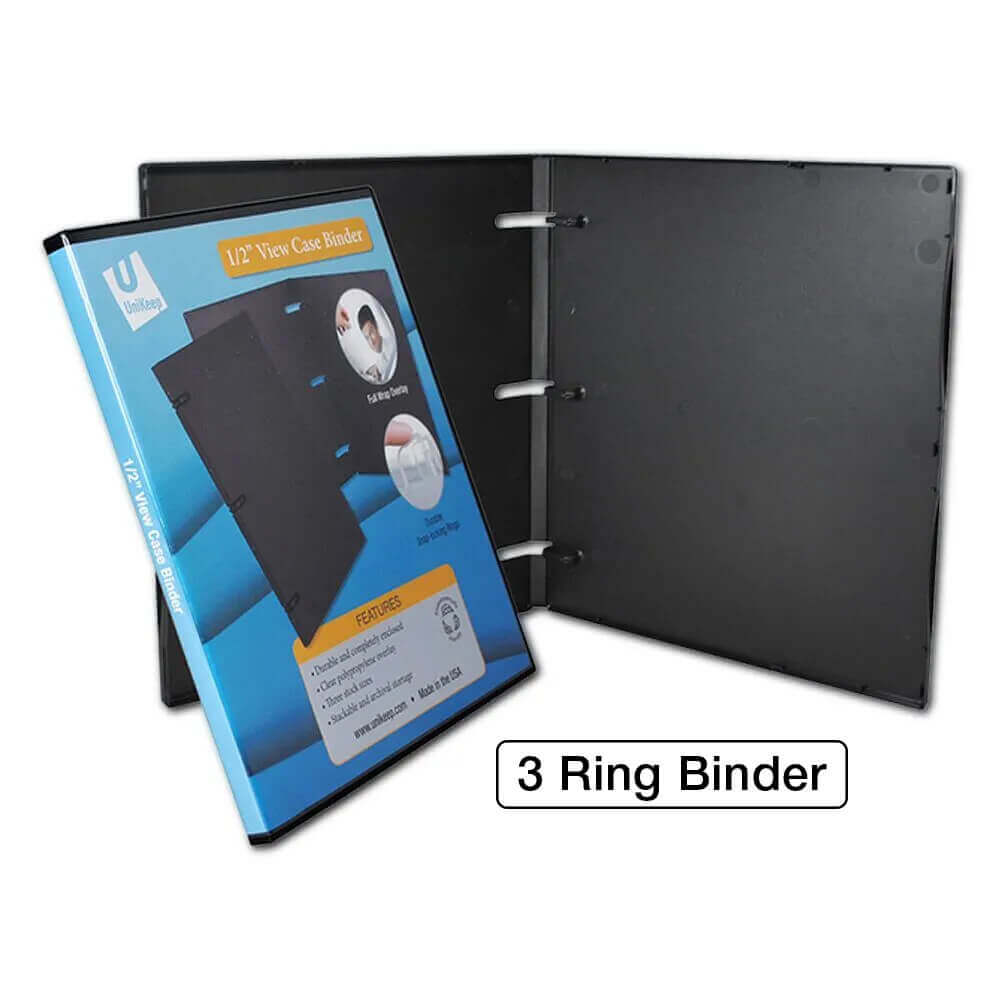
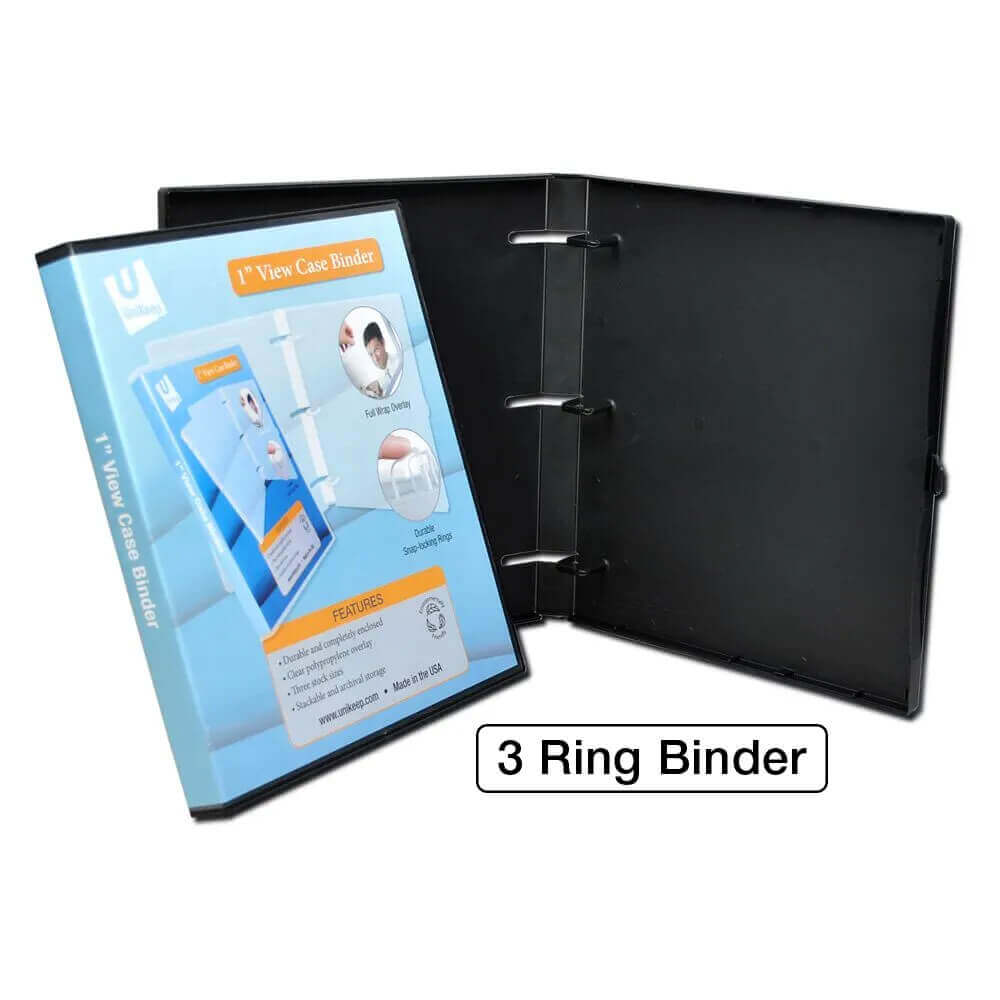
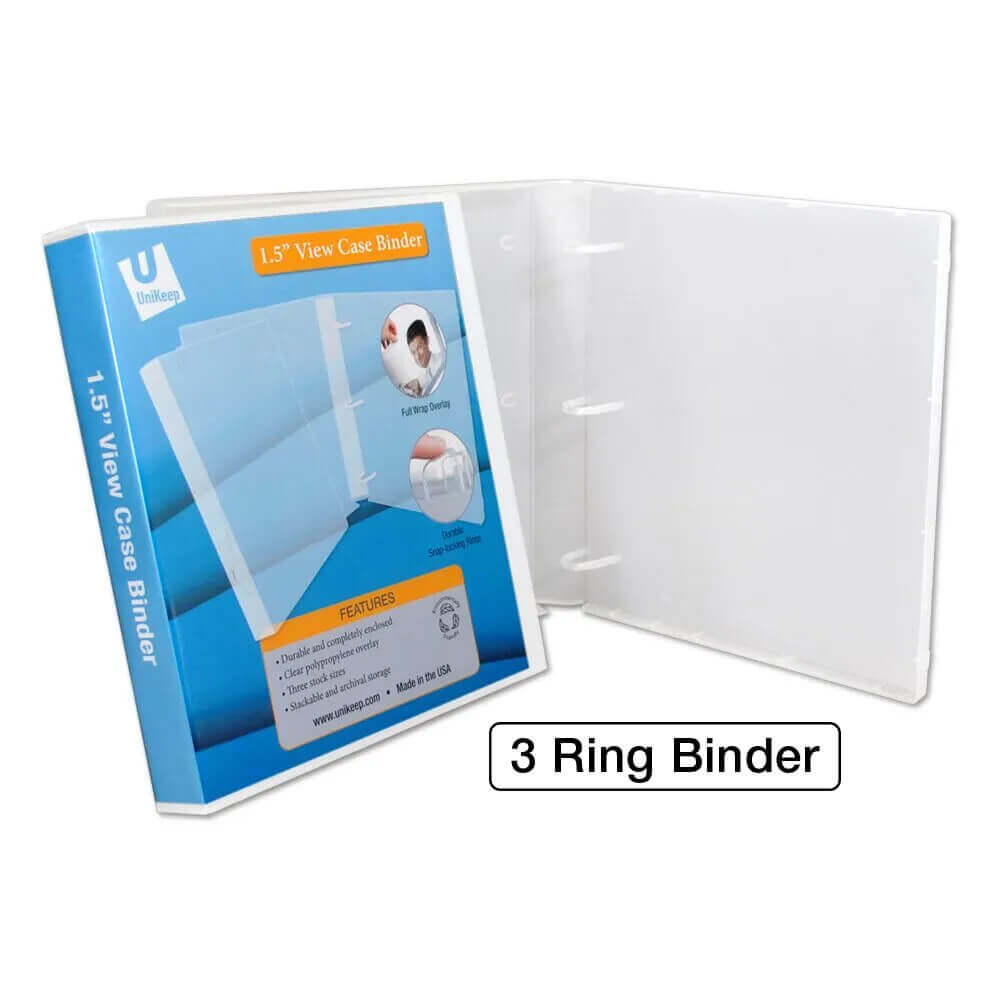
Office binders often include clear overlay covers for sharing reports or presentations. Often called “professional binders,” they let you slide in a cover sheet that explains what’s inside. Some binders also have stain-resistant covers that hold up against ink and spills.
The Best Uses for 3-Ring Binders
You’ll find three-ring binders in offices, schools, and homes around the world. They’re especially popular in the United States, Canada, Western Europe, Australia, and much of South America.
The reason is simple: a 3-ring binder is one of the most effective ways to organize paperwork. Binders are easy to carry and store, and spine labels let you see at a glance what’s inside each one.
3-Ring Binders for Business
Even in a digital age, businesses can’t escape paperwork: invoices, contracts, employee forms, performance reviews, and more. Finding a document is often faster in a well-labeled 3-ring binder than in a filing cabinet.
A 3-ring presentation binder is a great tool for sales teams visiting prospects. It’s often easier to use than a laptop, and many customers prefer flipping through printed pages to watching a screen. For showcasing work, a portfolio binder is easy to carry and large enough to present everything a client needs to see, and for executives, a leather 3-ring binder makes a polished impression.
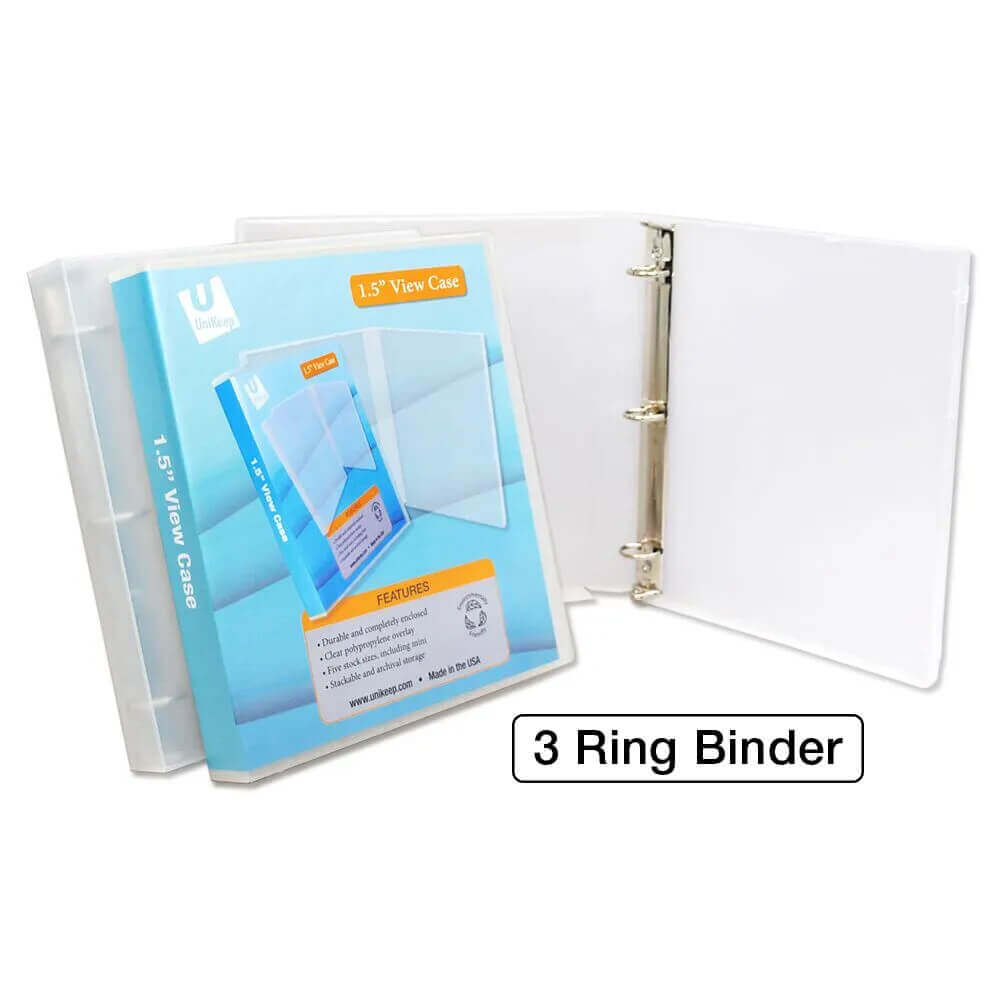
Many businesses also use 3-ring binders for procedure manuals that show employees how to complete tasks the right way. In dirty or high-wear environments, sheet protectors keep each page clean and readable.

3-Ring Binders for School and College
3-ring binders are ideal for school, college, and university. Use one binder per subject to keep notes, homework, and assignments organized in one safe place. We recommend:


3-Ring Binders for Home
3-ring binders are just as useful at home. Print your favorite recipes (or clip them from magazines) and keep them in a binder for easy reference, or use one to organize bills and other important papers you need to keep. We recommend:


Find the Right 3-Ring Binders for the Job
- Best 3-Ring Binders for Filing and Archiving
- Best 3-Ring Binders for Home and Recipes
- Best 3-Ring Binders for SDS/MSDS Compliance
- Best 3-Ring Binders for Presentations
Nothing is worse than buying a batch of binders that are too small, too large, or that wear out quickly. Now that you know the sizes, ring types, and materials to look for, browse our full selection of 3 ring binders and choose the best 3 ring binders for your needs.